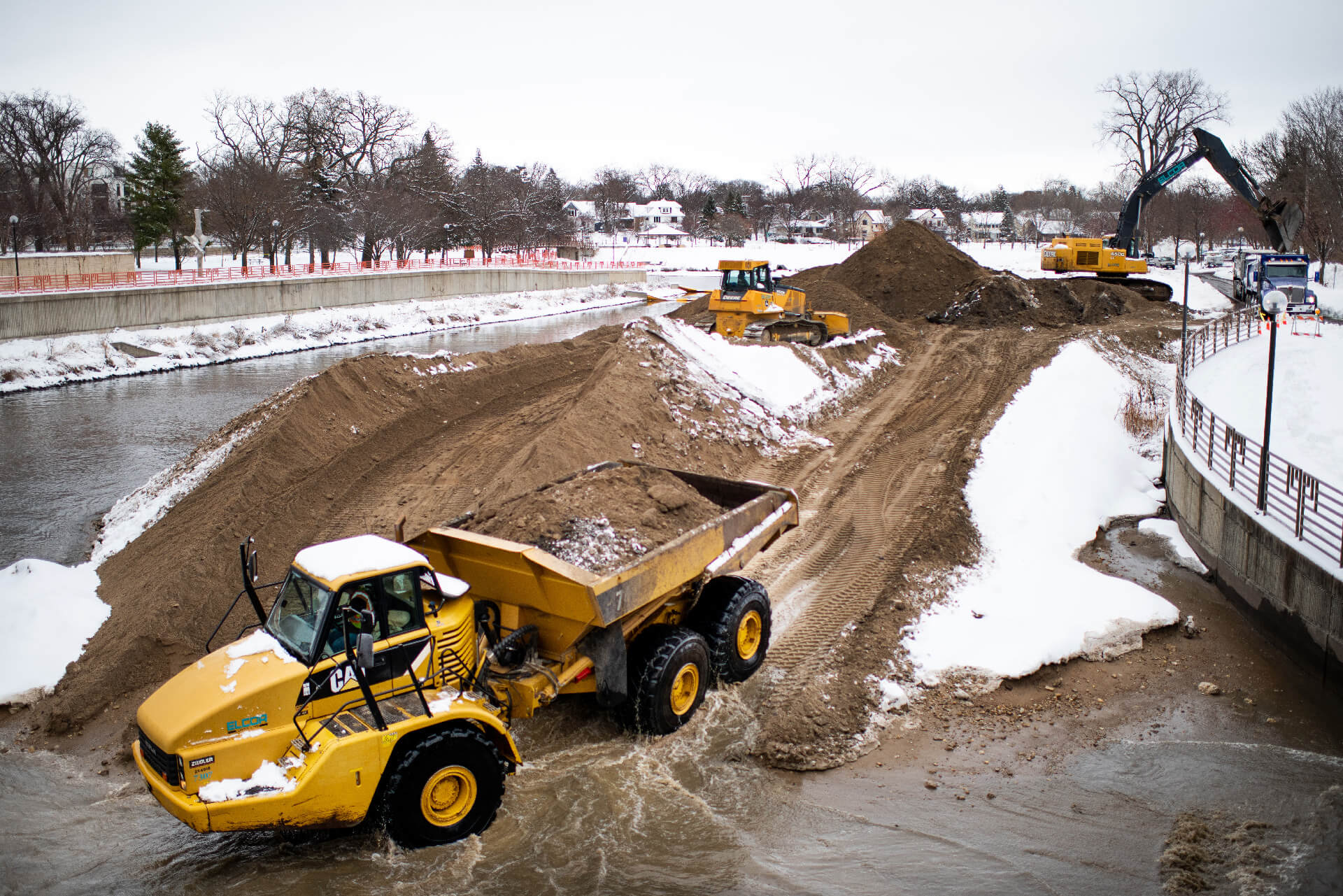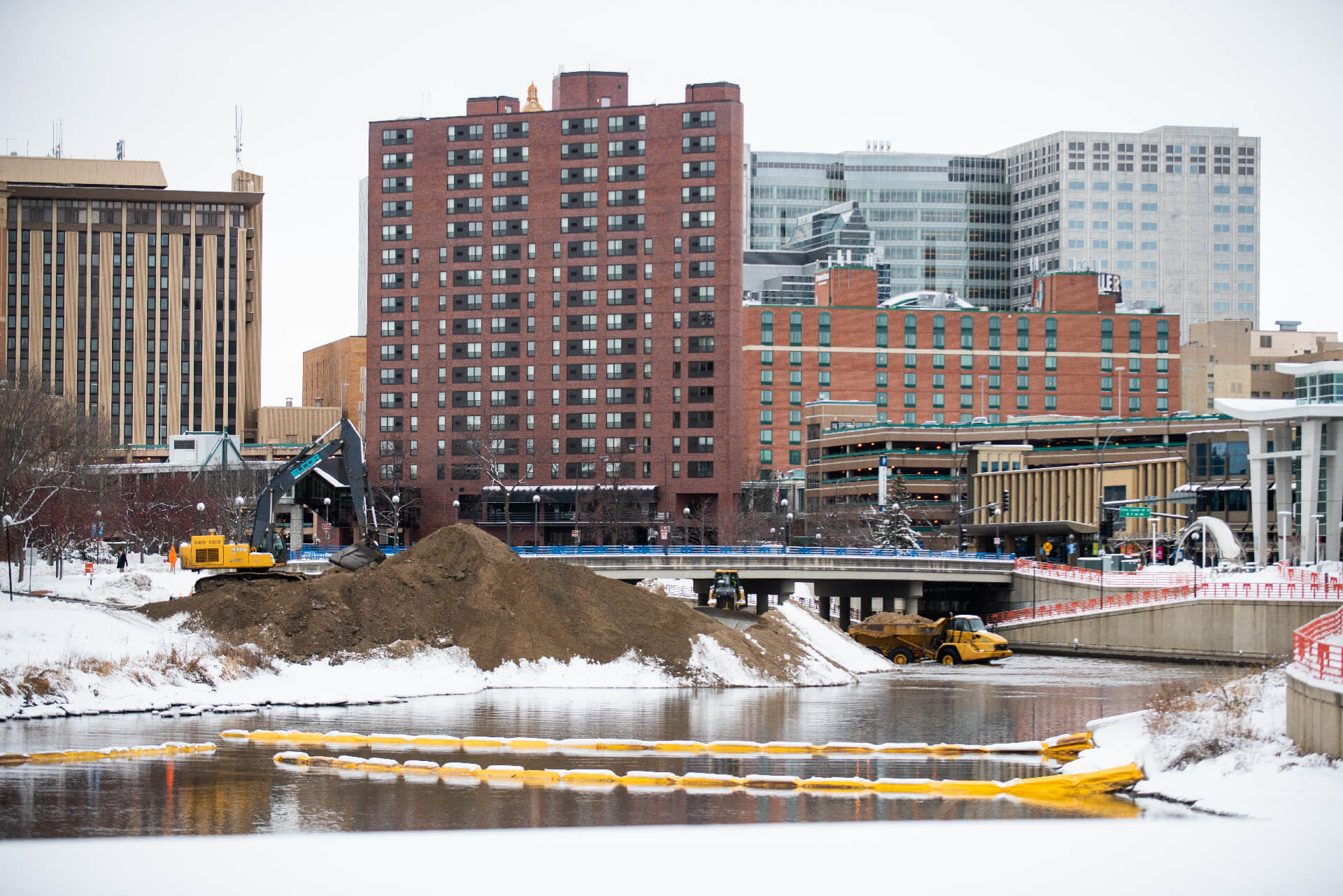
The removal of sediment from the flood control channels is an important part of maintaining the long-term function and reliability of the community’s flood protection system. Over time, sediment, silt, sand, debris, and other materials naturally collect within the channels as water moves through them. If this material is not removed, it can gradually reduce the depth and overall carrying capacity of the channel. When channel capacity is reduced, the system may not be able to move stormwater and floodwater as efficiently during heavy rain events, rapid snowmelt, or other periods of high water flow. Maintaining proper channel capacity is critical because these channels were designed to direct floodwaters safely through the flood control system and away from homes, businesses, roads, utilities, and other important infrastructure. When sediment builds up, water levels can rise more quickly during a flood event. This increases the risk that floodwaters could leave the channel, spill into nearby areas, and create damage or safety concerns for residents, property owners, and local businesses. Regular dredging helps reduce that risk by restoring the channel to its intended shape, depth, and flow capacity. This work is also part of responsible infrastructure maintenance. Flood control systems are not “set it and forget it” projects. Even after construction is complete, they require ongoing inspections, maintenance, and periodic improvements to continue performing as intended. Dredging is one of the key maintenance activities that helps extend the life of the system and protect the investment made when the flood control project was originally completed. This will be the fourth time the entire channel has been dredged since the flood control project was completed in 1995. That history shows that sediment removal is a recurring and expected maintenance need rather than an unusual repair. Each dredging effort helps ensure the channels remain prepared for future flood events and continue to provide protection for the surrounding community. By removing accumulated sediment now, the project helps preserve the effectiveness of the flood control system before capacity issues become more serious. Proactive maintenance is often more cost-effective and less disruptive than responding after flooding has already occurred. Keeping the channels clear and properly maintained supports public safety, protects property, and helps reduce the potential impact of future flood events on area residents and businesses.
Contact us now for a free quote on your project